What legal requirements apply to AI tools in technical customer service in the EU?
The EU AI Act has been in force since August 2024, requiring transparency, logging, and human oversight for AI systems. In addition, digital B2C offers must comply with the BFSG and WCAG 2.1 AA by June 28, 2025 — with non-compliance risking fines of up to 100,000 euros. branchly meets all requirements out-of-the-box: GDPR-compliant EU data storage, EU AI Act-Ready architecture with full logging, and WCAG / BFSG certification across all modules. This eliminates legal risks and saves B2B2C companies a separate compliance project.
How much does it cost to set up AI support for B2B2C companies with complex product documentation?
branchly offers flexible packages that adapt to your monthly session volume and your requirements. All plans include chatbot, AI search, navigator, forms, and omnichannel support. Setup is possible within just a few minutes, without developer resources. The AI learns directly from existing PDF guides, manuals, and technical documentations — no manual training required. Custom plans are available for enterprise customers with extensive product databases and multiple brands.
How does branchly support construction site teams with multilingual support via WhatsApp and voice messages?
Construction site workers rarely have both hands free to type and often speak Polish, Serbian, or Czech — while the manufacturer's telephone support usually only speaks German. branchly enables WhatsApp voice messages: The worker speaks their question in their native language, the AI transcribes it, understands the context, and responds in the same language with precise, technical instructions. This eliminates language barriers, reduces expensive calls with interpreters, and significantly accelerates troubleshooting on site.
Why should B2B manufacturers use QR codes directly on the product for customer service?
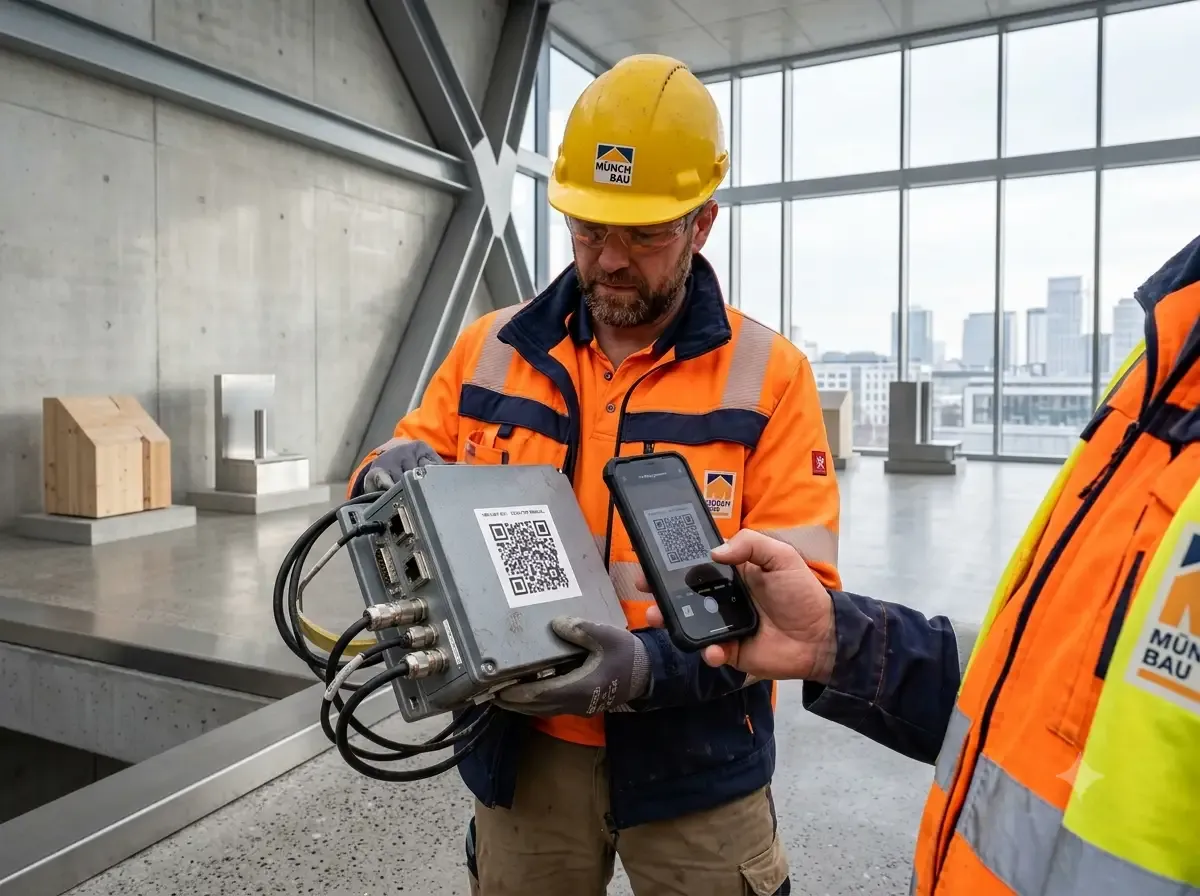
End users assembling or repairing a technical product at home do not have the patience to search a website for model numbers and manuals. A QR code directly on the device or the packaging directs them instantly to a product-specific chat — without searching, without navigating. The chat knows the model, accesses the correct documentation, and answers questions accurately. For manufacturers, this also offers valuable tracking: Which products trigger the most support queries? Which assembly steps are unclear? This data flows directly into product optimization and quality management.
How does automatic fault diagnosis work for complex technical products using AI?
The customer enters an error code or describes the symptom in the chat. branchly automatically searches all relevant product documents, detects dependencies between components, and guides the user step-by-step through the diagnosis. In doing so, the AI checks not only individual devices but also connecting cables, control elements, and software configurations to identify the root cause. The customer receives precise troubleshooting instructions, including links to spare parts if necessary.
What distinguishes branchly's multi-document analysis from conventional chatbots for technical products?
Conventional chatbots are rule-based and can only respond to pre-programmed keywords. They read at most one document and fail as soon as a question spans multiple manuals. branchly uses Agentic RAG: AI agents independently plan which documents they need to combine information from. Example: A light switch does not work. The AI simultaneously analyzes the manual for the switch, the panel, and the wireless connection, detects dependencies, and delivers a coherent diagnosis — instead of fragmented, separate answers.
How can manufacturers automate complex technical support inquiries from end customers without hiring expensive specialist staff?
branchly uses Agentic RAG to analyze and answer complex technical questions across multiple documents. When a customer reports an error, the AI doesn't just check the operating manual of the affected device, but also looks into connection components, control elements, and software configurations to identify the root cause. As a result, end customers resolve 80 percent of their problems independently, without the need to involve an expensive technician. For manufacturers, this means fewer tickets, shorter response times, and massive cost savings in support.